Guyana is the only English-speaking country in South America — and one of the last truly wild places on the continent. Over 80% rainforest. Jaguars you can actually see. Indigenous communities still living in the savannah villages their ancestors built. A 226-metre waterfall most travellers have never heard of. If you're planning a 2026 trip, here are the ten experiences worth building your itinerary around — verified against 57 GTA-licensed tour operators and a year of editorial coverage on the ground.
Kaieteur Falls — the world's largest single-drop waterfall
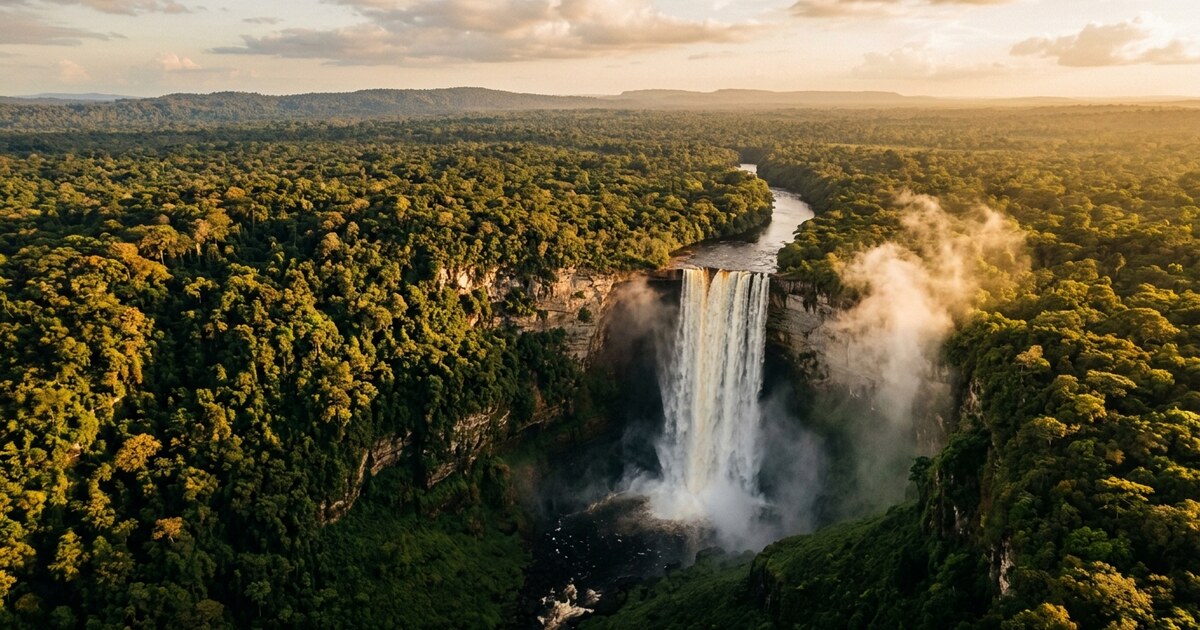
Kaieteur is the headline attraction, full stop. At 226 metres (741 feet) it's the world's largest single-drop waterfall by volume — nearly five times taller than Niagara, and more powerful per cubic-metre of flow than Victoria. What makes it surreal is the isolation: there are no railings, no boardwalks, no gift shop. You stand on the open sandstone cliff edge with the Potaro River thundering past your feet into the gorge below.
Most travellers visit on a half-day scenic flight from Eugene F. Correia (Ogle) Airport in Georgetown. Departures typically run 9:00-9:30 AM, with the entire trip back by early afternoon. Operators include Air Services Limited (50+ years pioneering the route), Evergreen Adventures, and Wilderness Explorers. For purists, the 5-day overland trek through the rainforest is the bucket-list option.
Walk the Iwokrama Canopy Walkway 30 metres above the rainforest
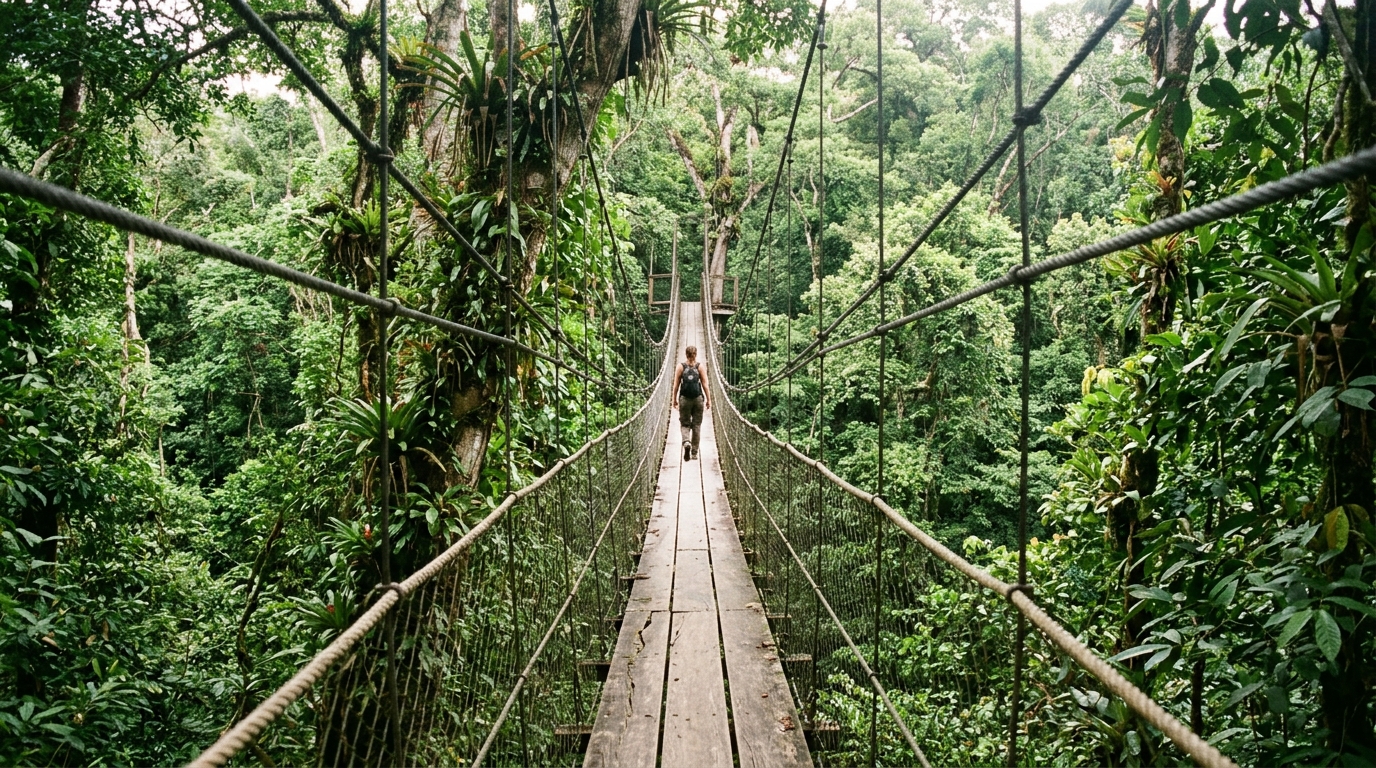
The Iwokrama Canopy Walkway is a 154-metre series of suspension bridges and viewing platforms hung 30 metres up in the rainforest canopy of the Iwokrama Forest — one of the largest protected blocks of unbroken tropical rainforest in the Americas. From the platforms you're at eye-level with toucans, scarlet macaws, capuchin monkeys, sloths, and (if your timing is good) the elusive harpy eagle.
The walkway sits within the larger Iwokrama International Centre — a unique research-meets-tourism arrangement where every traveller contributes to active jaguar, primate, and indigenous-fish research. You typically pair the canopy with Turtle Mountain trek (a 3-hour climb for panoramic forest views), and base at either Iwokrama River Lodge or Atta Rainforest Lodge. Reach Iwokrama overland from Georgetown (~6 hrs) or fly into Annai airstrip.
Track jaguars and giant otters in the Rupununi savannah
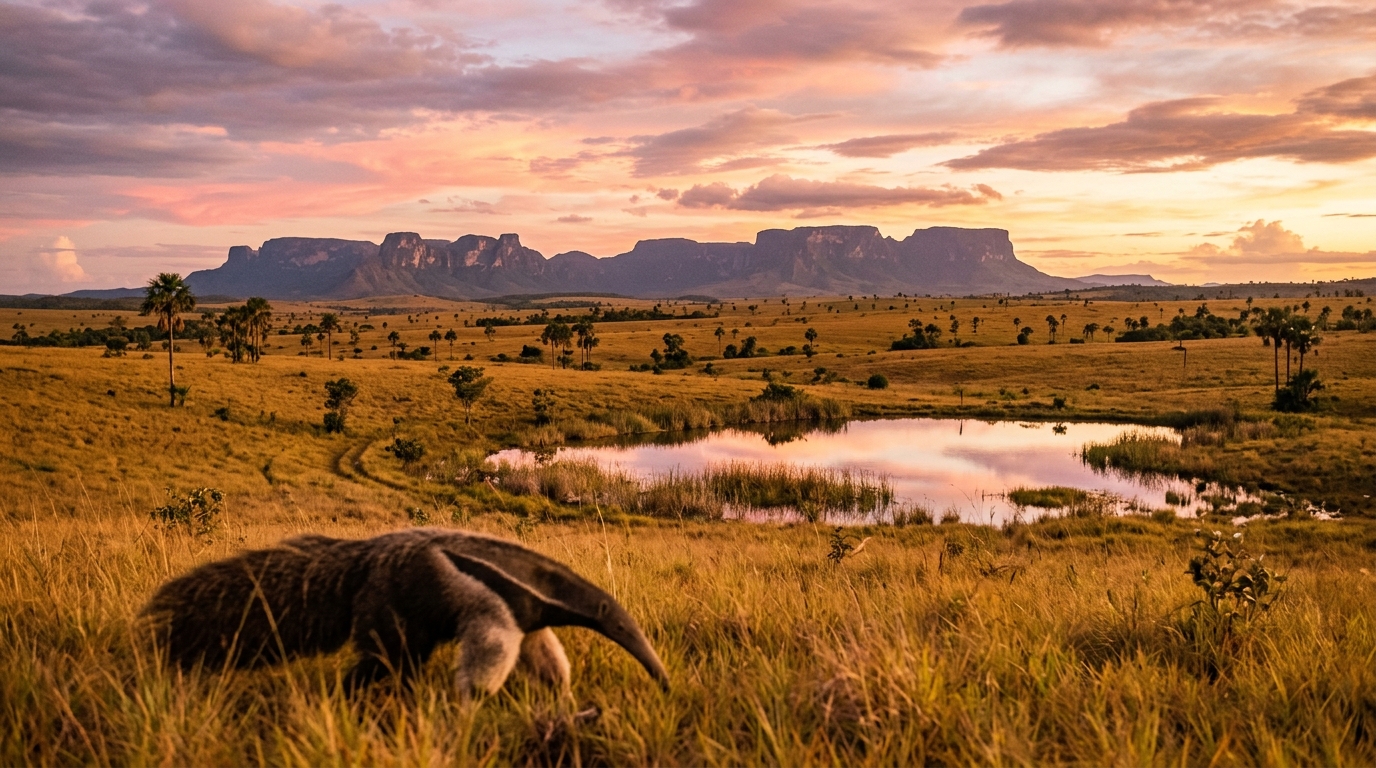
The Rupununi is Guyana's open frontier — a vast tropical savannah dotted with cattle ranches, isolated Indigenous villages, ité palm groves, and shallow wetlands that explode with wildlife in the dry season. This is where serious wildlife travellers come: jaguars, giant river otters, giant anteaters, giant armadillos, jabiru storks, capybaras, and over 400 bird species in a single region.
Base out of Karanambu Lodge, Rewa Eco-Lodge, or one of the Makushi community lodges like Yupukari. The Rupununi-specialist operators — Wilderness Explorers, Wanderlust Adventures GY, Guyana Truly Wild, Adventure Guianas — run multi-day expeditions combining ranch stays, river fishing for the giant arapaima, and Patamona village visits in the North Pakaraima Mountains.
Witness the world's biggest lily pads bloom at Karanambu
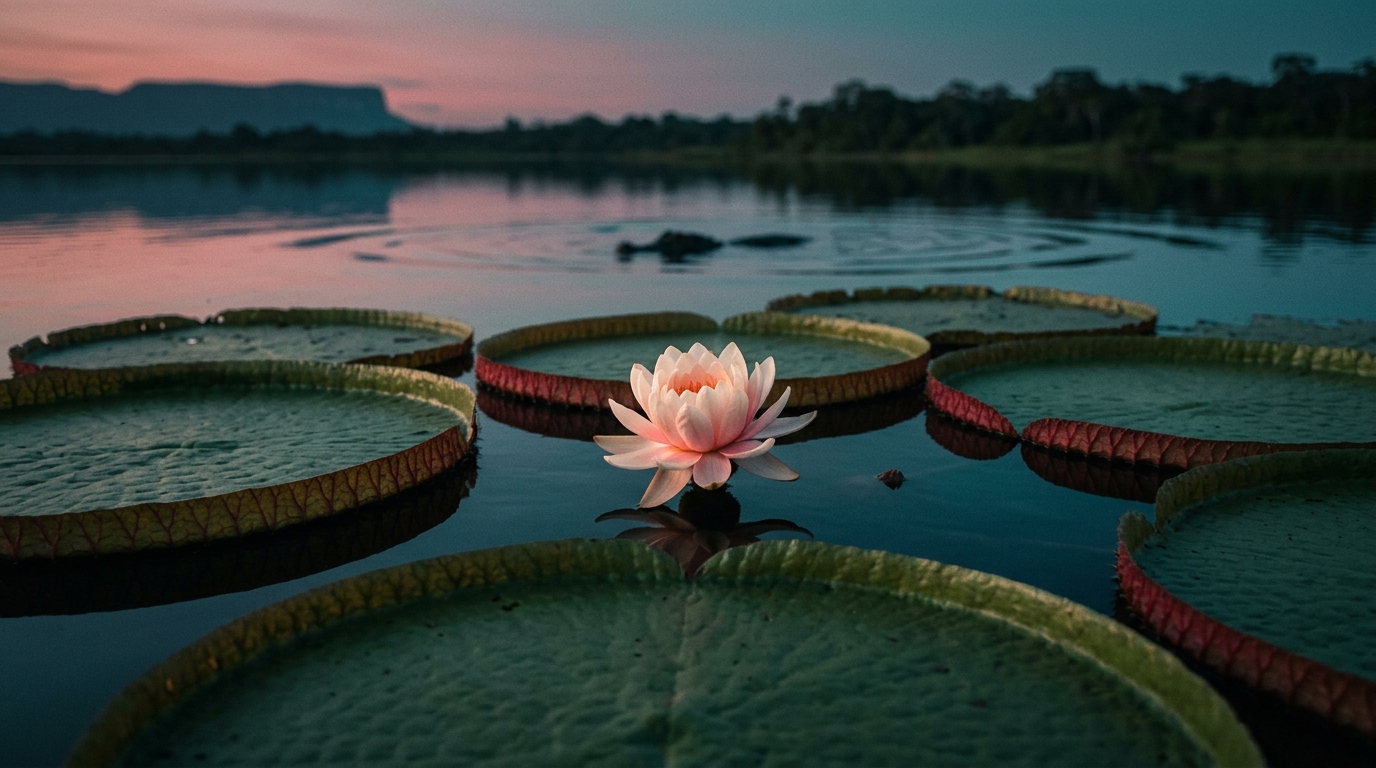
Karanambu Lodge is one of Guyana's iconic experiences — and almost certainly the most photographed. Founded in 1927 by the Melville family on the banks of the Rupununi River, it's the only place in the country where the Victoria amazonica giant lily pads grow to their full 2-metre diameter and put on their twilight bloom show. The flowers open at sunset, turn from white to deep pink overnight, and only bloom for two nights total before sinking back into the lake.
The evening "lily cruise" is the famous moment, but Karanambu's real story is the giant river otter conservation work founded by Diane McTurk — orphan otters were once raised and released here. The lodge still runs as a research station + boutique eco-lodge in one. Listed on our /tour-operators directory with full booking details.
Watch leatherback turtles nest on Shell Beach
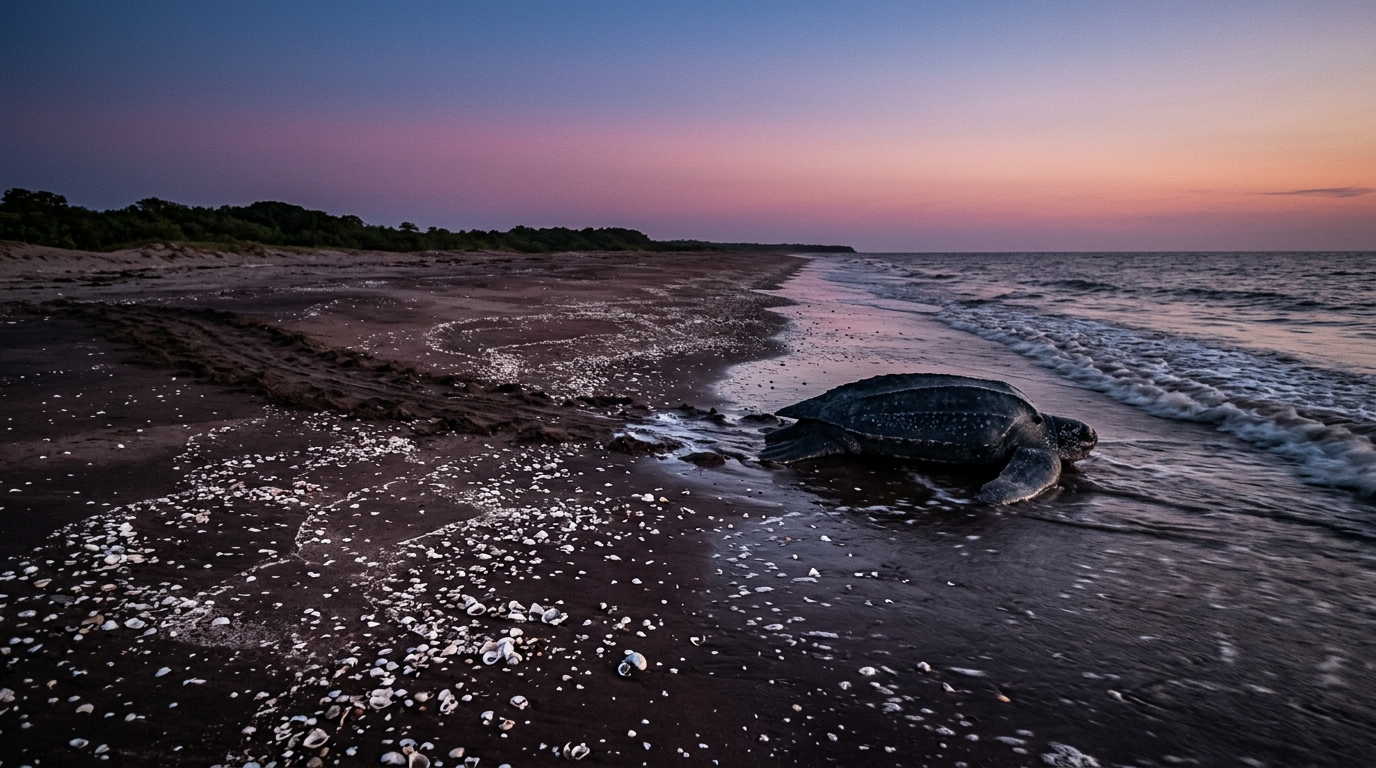
Shell Beach is a 145-kilometre stretch of remote Atlantic coastline in northwest Guyana, named for the literal shell fragments that cover the beach in white drifts. Between March and July, four species of endangered sea turtles come ashore here to nest — the giant leatherback (up to 800 kg), the green, the olive ridley, and the hawksbill. It's one of the most important nesting sites in the southern Caribbean.
This is a serious commitment — Shell Beach is remote and tour packages typically run 3-4 days with overland or boat transfers via Charity. Night-time nesting walks are led by Indigenous Arawak rangers who patrol the beach. Sightings of the leatherbacks coming ashore at midnight are not guaranteed, but the protocol is respectful and well-managed.
Stay with the Makushi at Surama Eco-Lodge
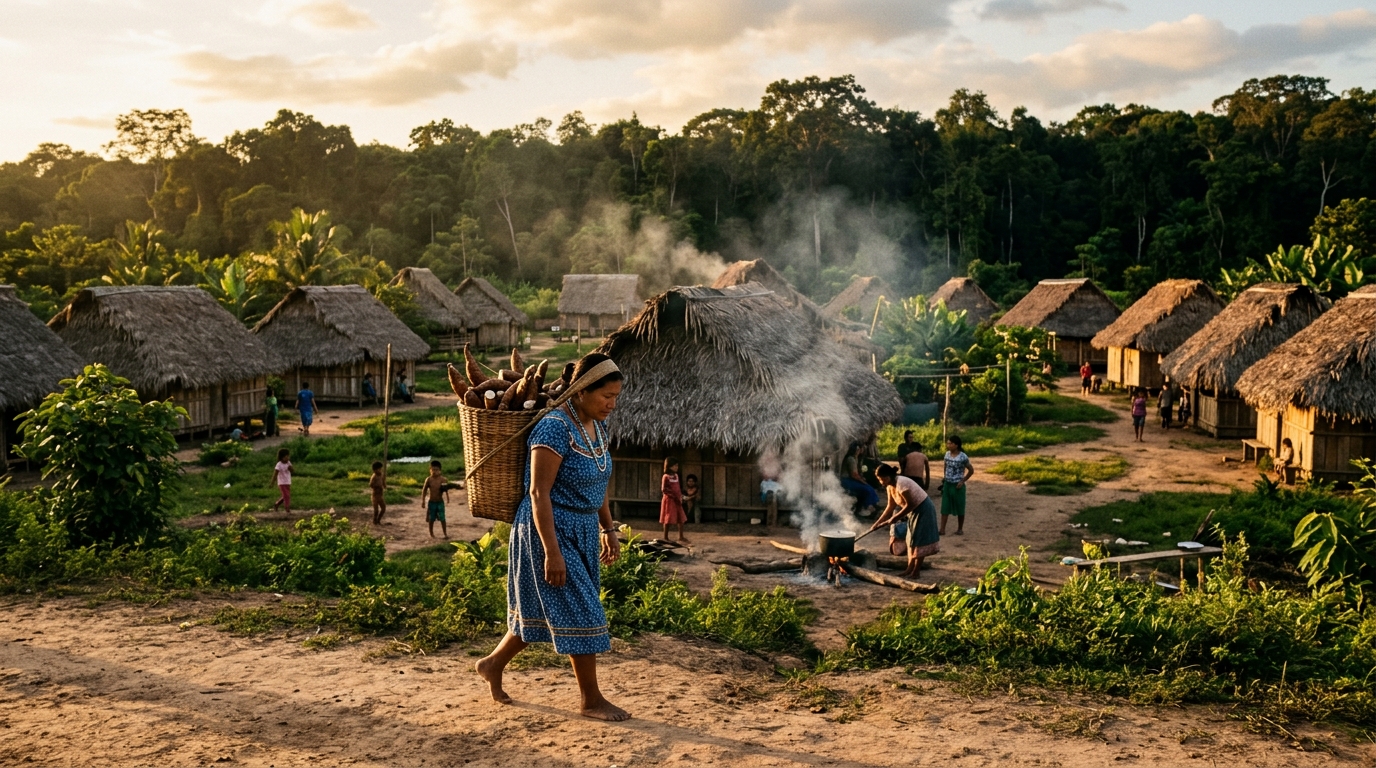
Surama is a Makushi Indigenous community nestled in a cleared savannah pocket inside the Iwokrama Forest. The village has run its own award-winning eco-lodge since 1996 — every guest stay is structured to channel revenue directly to the community, fund the village school, and support traditional ranching and farming livelihoods. Surama is one of the standout entries in our full Community-Based Tourism in Guyana guide (the lineup of all village-owned lodges nationwide).
Activities are led by Makushi guides: Surama Mountain hike at sunrise (panoramic forest view from a granite outcrop), Burro Burro River paddling, hunting and fishing demonstrations, cassava-bread making, and visits to traditional farms. Most travellers pair Surama with the Iwokrama canopy walkway — they're 30 minutes apart. The lodge has been recognised by World Travel & Tourism Council and the IUCN for its community-tourism model.
Trek to the summit of Mount Roraima
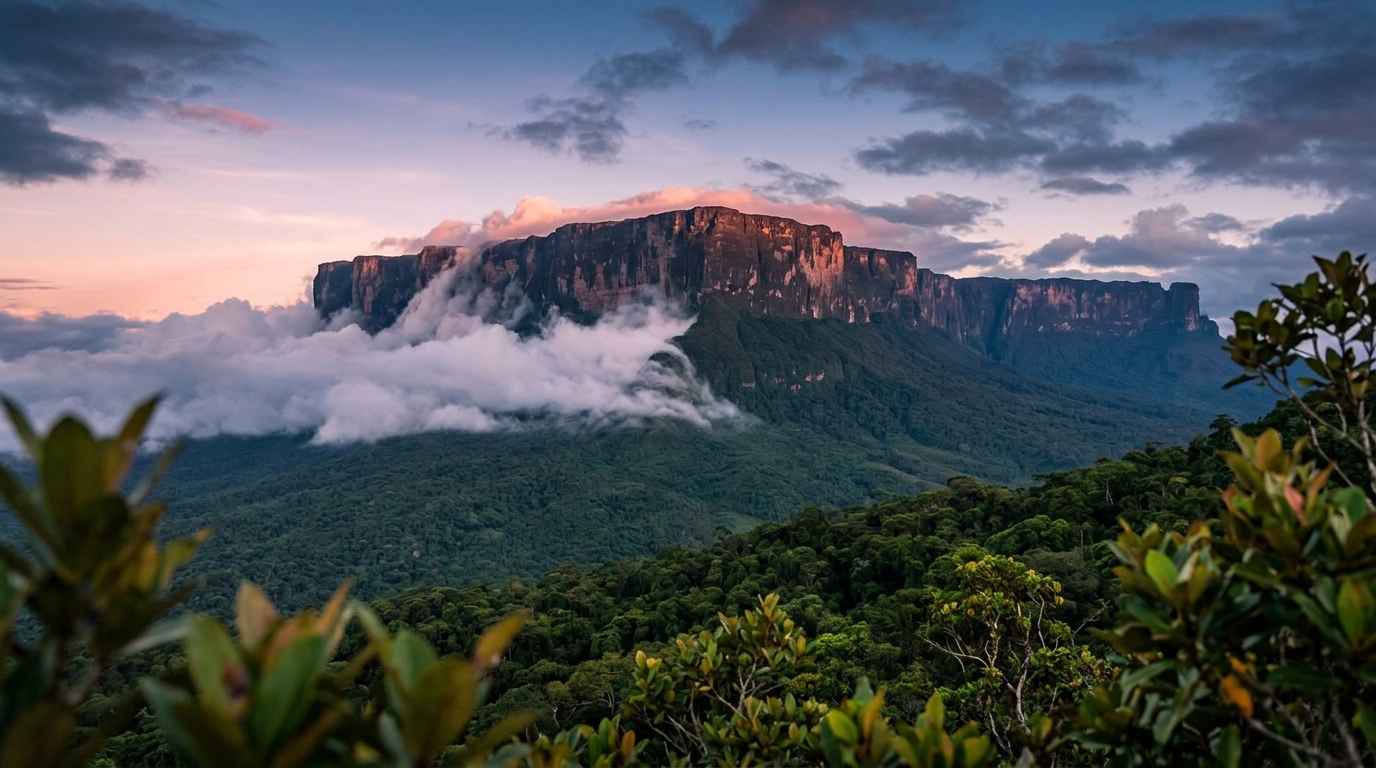
Mount Roraima is the legendary table-top mountain (tepui) that inspired Sir Arthur Conan Doyle's The Lost World and the setting for Pixar's Up. The summit plateau sits at 2,810 metres and hosts species found nowhere else on Earth. Most travellers approach via Venezuela, but the Guyana approach from Paruima is the harder, wilder, less-trafficked route — a 7-8 day expedition through dense rainforest and savannah from the Guyanese side.
This is for serious trekkers. Adventure Guianas (based in Lethem) is the specialist for the Guyana-side route. Expect daily hikes of 8-12 km with elevation, camp-style accommodation, and basic provisions. The reward: standing on a rock surface that's been there for two billion years, watching clouds form below you.
Swim under Orinduik Falls on the Brazil border
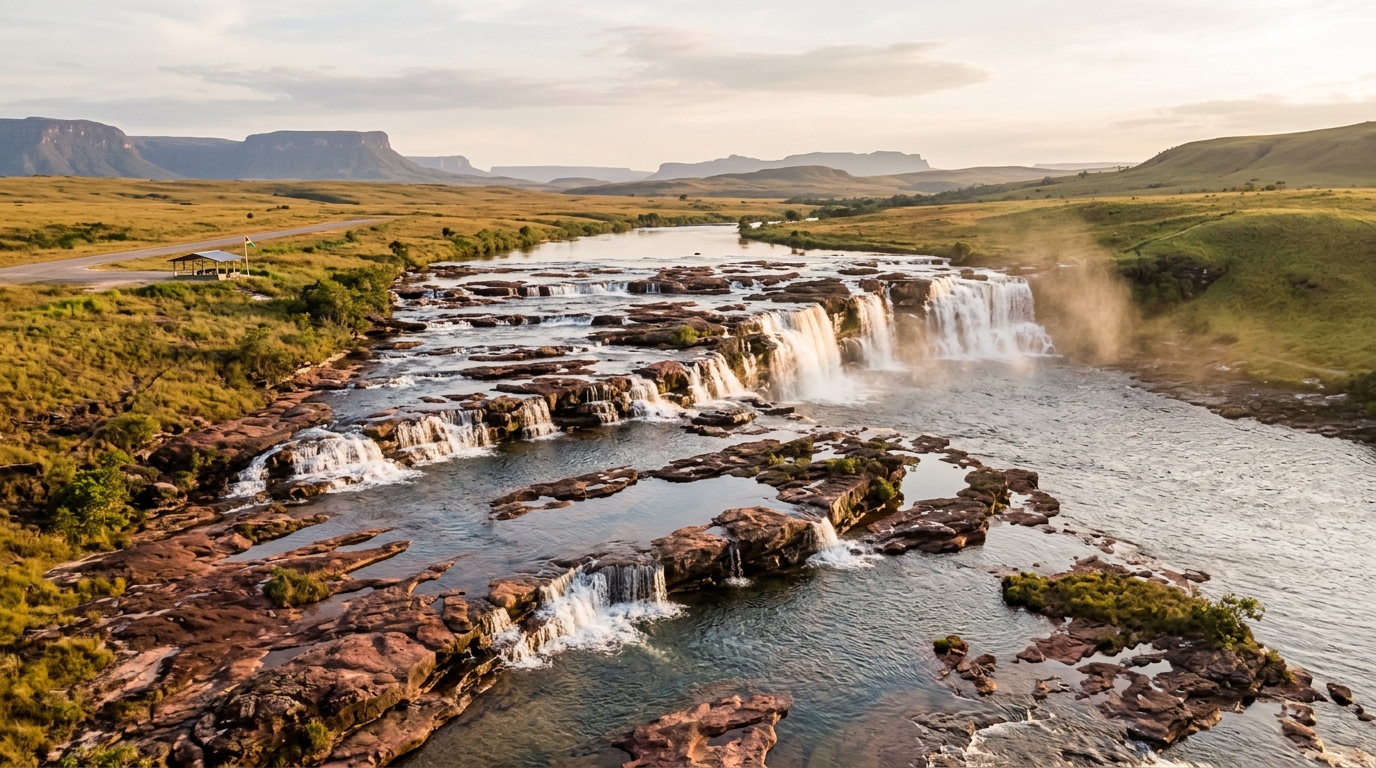
While Kaieteur is the dramatic photogenic giant, Orinduik Falls is the swimmable, accessible counterpart. The Ireng River pours over a series of stepped jasper terraces forming a wide multi-tiered cascade on the Guyana-Brazil border, with the Pakaraima Mountains rolling away in every direction. Most importantly: you can wade and swim in the natural rock pools.
Orinduik is usually paired with Kaieteur as part of the Kaieteur + Orinduik combo flight — a single-day excursion from Ogle Airport that visits both. Operators Air Services Limited and Evergreen Adventures are the standard providers. Allow about 90 minutes on the ground at Orinduik — enough time to swim, walk along the rock terraces, and dry off before the return flight.
Walk Georgetown's colonial heritage trail
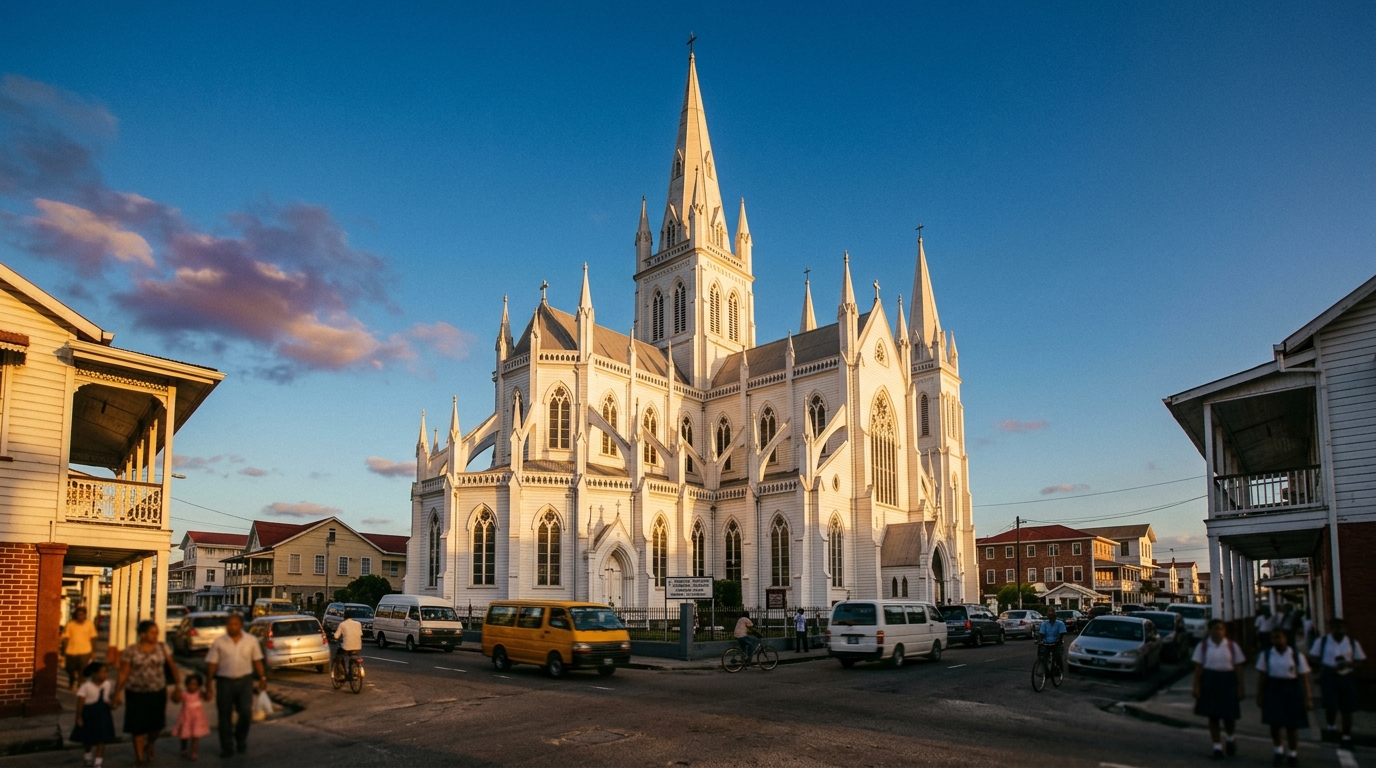
Georgetown is most travellers' first and last day in Guyana — and worth more than a passing layover. The capital was laid out on a Dutch grid in the 1700s, then re-imagined by the British as a sea-level city of white-painted wooden buildings: St George's Cathedral (one of the tallest wooden structures in the world), City Hall, the Public Buildings, Stabroek Market with its iconic four-faced clock, the Walter Roth Anthropology Museum, and the Botanical Gardens with its resident manatees.
The best way to see it is the self-guided heritage walking tour — 14 landmarks across 3-4 hours, walkable in the morning before the heat. Pair with lunch on a hotel terrace (the Marriott pool deck or German's seafood restaurant near Camp St) and you've covered Georgetown properly. For organised tours, see our /tour-operators directory — Georgetown city tours start at $40-80 USD. For a full capital itinerary, see our Top 10 Things to Do in Georgetown guide.
Meet the Hoatzin on Mahaica Creek
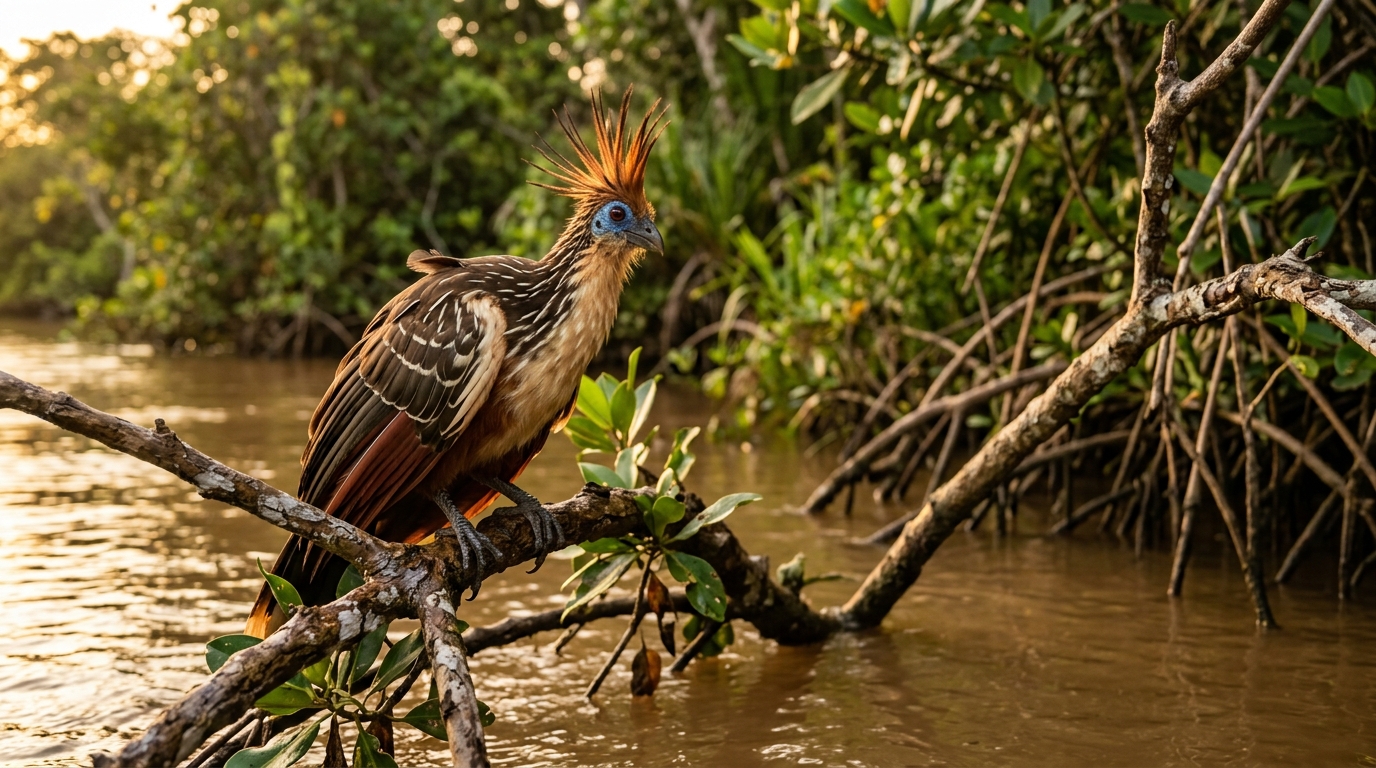
The Hoatzin is Guyana's national bird — a prehistoric-looking, spiky-crested, blue-faced oddity sometimes called the "stinkbird" because of the cow-like fermentation that powers its digestion. It's one of the strangest birds on the planet, and Mahaica Creek (about an hour east of Georgetown) is where you can reliably find it.
The Mahaica Creek boat tour is the half-day birding entry point — accessible for any traveller, no specialist gear or fitness needed. Beyond the Hoatzin you'll spot manatees, several heron and kingfisher species, and (if patient) the elusive Linnaeus's two-toed sloth. Operators include Free Bird Travel (run by Dinesh and Sanne, who specialise in customised birding) and Wilderness Explorers.